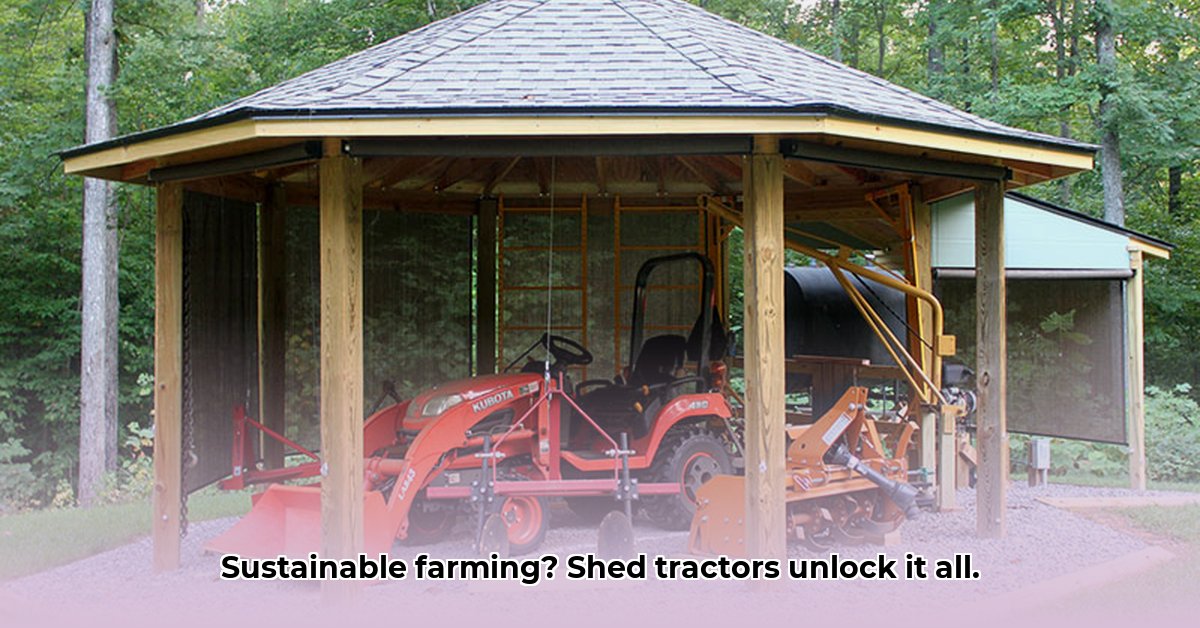
Shed Tractor: Your Compact Ally in Sustainable Farming
Tired of the high costs and heavy machinery of conventional farming? Imagine a more manageable, fuel-efficient, and environmentally friendly approach. That's the promise of the "shed tractor"—a concept focusing on smaller, adaptable machinery tailored to sustainable agriculture's needs. This guide isn't about a specific brand; it's about the idea of using smaller, versatile equipment efficiently. We'll guide you through choosing, setting up, maintaining, and using these tools to build a more successful and sustainable farm. Real-world examples and practical advice will help you regardless of your experience level. Let's explore how to make your farm greener, more efficient, and potentially more profitable. For more information on the costs involved, see our guide on tractor pricing. For more on the financial aspect, check out the [average tractor costs] (https://average-cost-of-a-tractor.pages.dev).
Why Choose a Shed Tractor?
Why opt for a shed tractor over a large conventional tractor? Larger tractors are often excessive for smaller farms or specific tasks. They're expensive to purchase, operate, and maintain. Shed tractors offer a cost-effective, sustainable alternative. They consume less fuel, minimize soil compaction, and are highly maneuverable in confined spaces. Ideal applications include:
- Mixing animal feed.
- Operating small implements like tillers or seeders.
- Powering irrigation pumps.
- Generating electricity (in some models), reducing grid dependence.
- Transporting supplies.
Isn't it inefficient to use a huge tractor for moving feed in your barn? It wastes fuel and compacts soil if driven unnecessarily across fields. A shed tractor avoids this waste.
Picking the Right Shed Tractor for You
Selecting the right shed tractor depends on your needs and budget. Consider:
- Power (Horsepower): Power needs depend on your tasks. Light work requires less power than heavier tasks.
- Size: Measure your shed carefully to ensure sufficient maneuverability. Avoid tractors too large for your space.
- Attachments: Consider compatibility with tillers, post-hole diggers, etc.
- Fuel Efficiency: Prioritize fuel efficiency—diesel or even better, electric options. Electric models may have higher initial costs but lower long-term fuel expenses.
- Maintenance: Easy maintenance is key. Choose models with easily accessible parts and straightforward maintenance procedures.
Setting Up and Using Your Shed Tractor: A Step-by-Step Guide
Prioritize safety!
- Site Preparation: Ensure a level shed floor with ample maneuverability space, removing any obstacles.
- Safety First: Thoroughly read the owner's manual before operation. Understand all safety features and procedures.
- Pre-Flight Check: Before each use, check fluids (oil, coolant) and inspect for damage. Addressing small problems prevents larger issues.
- Training (if needed): If unsure, consider professional training for safe and efficient operation.
- Routine Maintenance: Regular maintenance (following manufacturer recommendations) is crucial for longevity. Think of it as preventative maintenance.
Proper setup and consistent maintenance are pivotal for optimal performance and longevity.
Case Study: Sarah's Sustainable Success Story
Sarah, a small-scale organic farmer, transitioned to a shed tractor for increased efficiency. Previously, she performed many tasks manually. Now, she efficiently mixes feed, powers irrigation, and even generates some electricity. Her fuel costs reduced significantly, while efficiency and sustainability improved. This showcases the threefold benefits: financial, efficiency, and environmental.
Weighing the Pros and Cons: Shed Tractors
| Advantage | Disadvantage |
|---|---|
| Lower fuel costs | Less powerful than large tractors |
| Minimizes soil compaction | Fewer attachments available |
| Excellent maneuverability | Possibly higher initial cost |
| Cost-effective for small farms | May have limited versatility |
Consider these aspects carefully when deciding. Your needs will determine the best fit.
Boosting Your Shed Tractor's Sustainability
While shed tractors are inherently more sustainable, you can further enhance their eco-friendliness:
- Use biodiesel or renewable energy sources.
- Adopt precision farming techniques to minimize waste and maximize efficiency.
- Employ sustainable land management practices to improve soil health.
Combining a shed tractor with smart farming practices creates a truly sustainable and efficient farm.
How to Overcome Barriers to Precision Farming Adoption in Wheat Production
Key Takeaways:
- High upfront costs are a major obstacle. Explore leasing or shared ownership models.
- Data management can be overwhelming. Start small, focusing on one key metric.
- Lack of internet access in rural areas impedes data transfer. Investigate alternative connectivity options.
- Farmer training and education are critical. Participate in workshops and seek expert advice.
- Interoperability between systems is a challenge. Choose compatible equipment and software.
- Data privacy concerns are legitimate. Understand data security protocols.
Precision farming offers significant potential for boosting wheat yields and sustainability. However, many farmers face challenges hindering its adoption. Let's address these obstacles:
The Cost Factor: A Significant Hurdle
High initial investment costs are a major barrier, especially for smaller farms. Consider leasing, equipment-sharing partnerships, or government grants and subsidies to mitigate this.
Data Deluge: Mastering the Information Overload
Precision farming generates substantial data. Start with one or two key performance indicators (KPIs), like optimizing nitrogen application based on soil variability, and gradually expand.
Connectivity Challenges: Bridging the Digital Divide
Reliable internet is essential. Explore satellite internet or cellular data alternatives in areas lacking high-speed internet.
The Human Element: Training and Education
Comprehensive training and education are vital. Seek out workshops, mentorship programs, and agricultural extension services.
System Integration: Playing Nicely with All Your Tools
Lack of standardization and interoperability between systems presents a challenge. Carefully research compatibility before investment, aiming for seamless data sharing and integration.
Data Security: Protecting Your Valuable Information
Data security and privacy are crucial concerns. Choose reputable providers with strong security protocols and transparency.